Artisans, Sámi handicraft organizations, and people interested in Sámi handicrafts gathered at the Duodji Akademiija seminar in Hetta
The continuity of the Sámi handicraft tradition requires long-term work, spaces for making, and opportunities for the transfer of knowledge and skills from one generation to another. These were the key messages at the workshop seminar organized by the Duodji Akademiija 2027 project, which brought together Sámi handicraft artisans, representatives of Sámi handicraft organizations, and people interested in Sámi handicrafts in Hetta on 13 June to discuss the current state and future of the Sámi handicraft tradition.
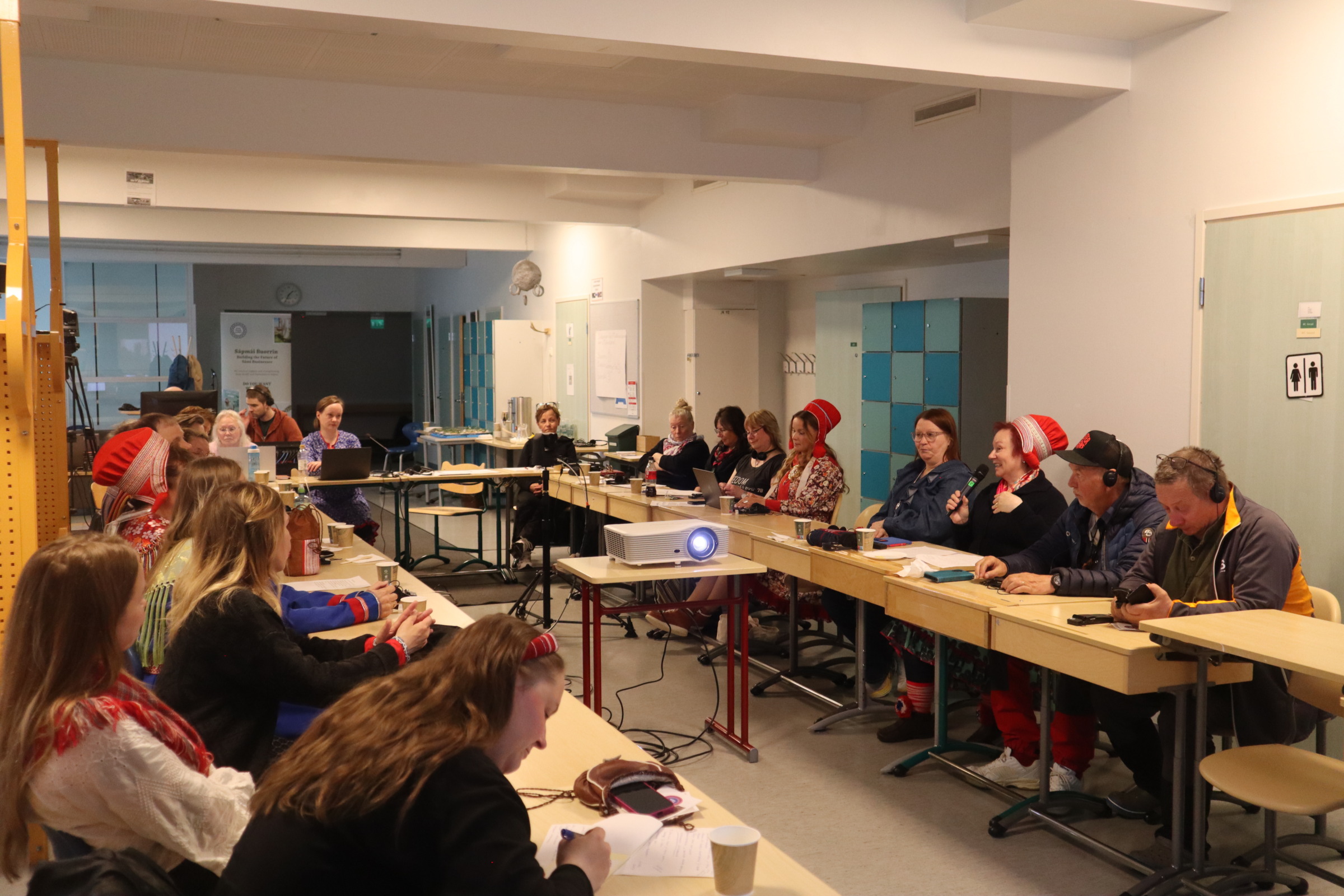
Discussion on the future of Sámi handicraft at the Hetta seminar. Photo: Adedayo Peter Allinson.
Around twenty participants attended the seminar in person at Hetta school, and approximately the same number took part remotely.
The seminar included a panel discussion on the current state of the Sámi handicraft tradition in Enontekiö, Kautokeino, and Karesuando on the Swedish side. The panelists were Maarit Magga from Enontekiö, Ida-Maria Marakatt from Karesuando, and Haakon Isak Vars and Inga Hermansen Hætta from Kautokeino.
The discussions highlighted differing situations between regions. At present, the Sámi handicraft tradition is strongest in Kautokeino, while in Enontekiö and Karesuando there are more challenges related to its continuity. Even in Kautokeino, concerns were raised particularly about the future of wood and antler crafts.
The workshop explored ways to strengthen the Sámi handicraft tradition. The importance of resources and political will, as well as the need for long-term action, were emphasized in the discussions. Spaces dedicated to practicing Sámi handicrafts are needed in Enontekiö and Karesuando, while suitable facilities already exist in Kautokeino.
Participants stressed that opportunities to learn Sámi handicrafts should be provided from early childhood onwards. In addition, opportunities and safe environments are needed for encounters between generations, where knowledge and skills can be passed on naturally. Especially in Enontekiö and Karesuando, there was a wish for continuity in Sámi handicraft-related projects and activities. Cross-border cooperation to promote Sámi handicrafts was seen as important.
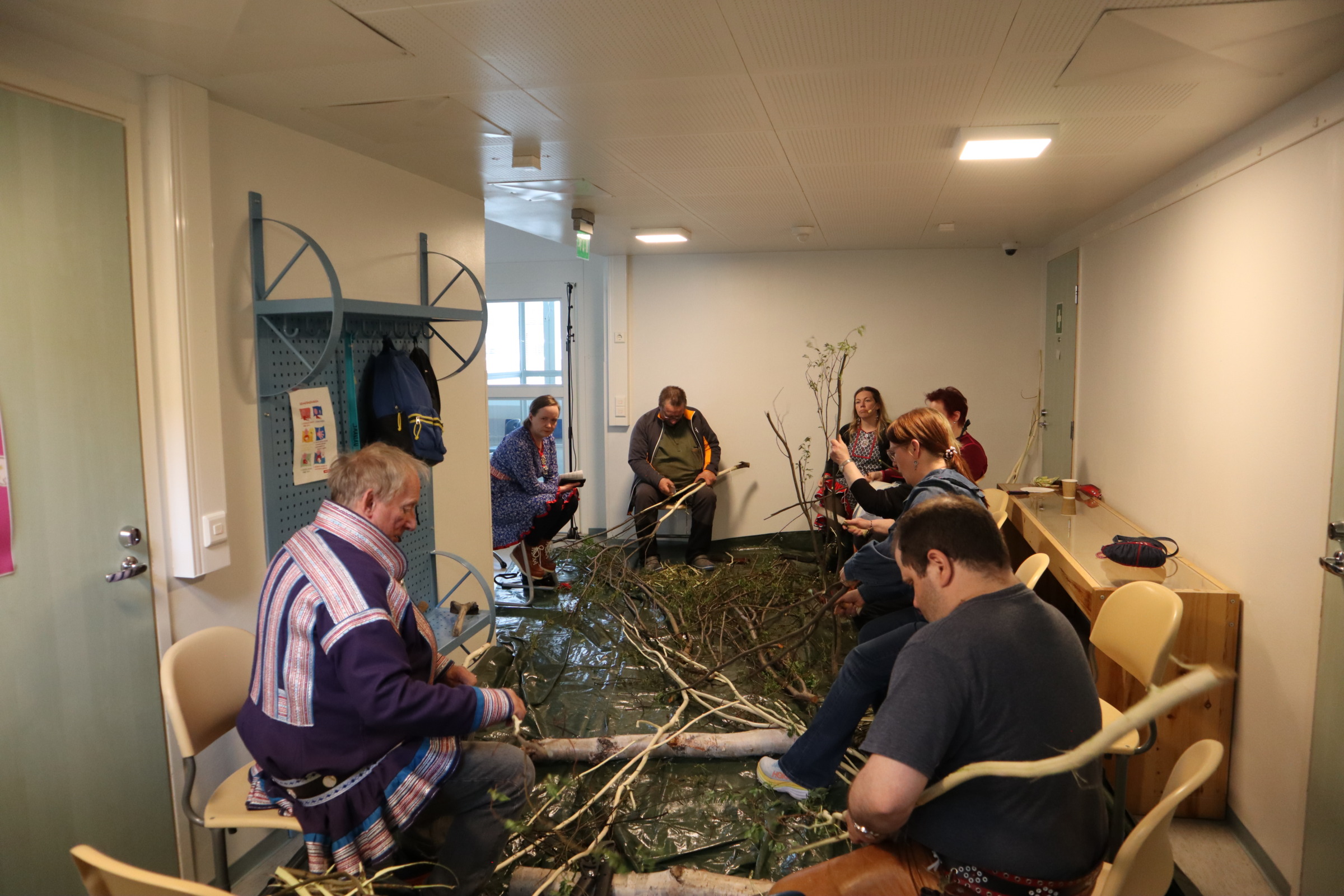
At the end of the day, a Sámi handicraft materials workshop was held. Photo: Adedayo Peter Allinson.
At the end of the day, a Sámi handicraft materials workshop was held. The preparation of ethical guidelines for Sámi handicrafts was also addressed, along with topics such as the importance of preserving regional styles and the ecological nature of Sámi handicrafts.
The views raised at the seminar will be used in the further implementation of the Duodji Akademiija 2027 project and in planning future projects and actions.
The Duodji Akademiija 2027 -project is a joint project of the Sámi Parliaments in Finland and Norway and is funded by the Interreg Aurora -programme. National co-financiers include the Regional Council of Lapland and Troms Fylkeskommune.
Read more about the project: Duodji Akademiija 2027
For more information:
Birit Tornensis
Project planner, Duodji Akademiija 2027
birit.tornensis@samediggi.fi
+358 40 545 7740