

Indigenous Peoples’ own representation must be safeguarded in the follow-up to COP17
The 17th meeting of the Conference of the Parties to the UN Convention on Biological Diversity (COP17) adopted the modalities of the new Subsidiary Body on Article 8(j), SB8J, but did not reach agreement on how Indigenous Peoples’ representation within the body should be safeguarded. A Friends of the Bureau group of representatives of Indigenous Peoples and local communities, supporting the Bureau of SB8J, was established on an interim basis for each SB8J meeting. The Sámi Parliament would have preferred a permanent solution that strengthens Indigenous Peoples’ own representation in decision-making.
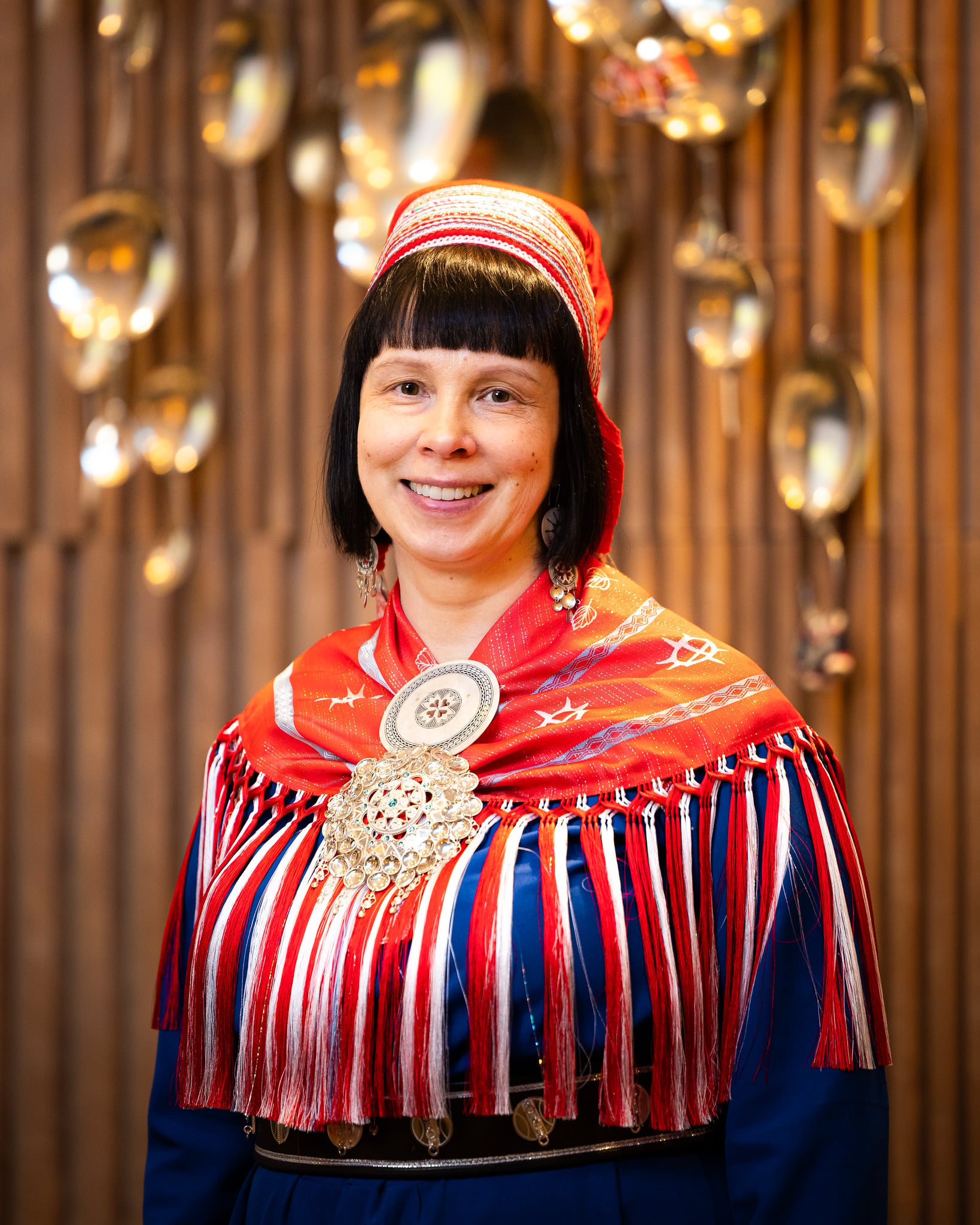
President of the Sámi Parliament in Finland Pirita Näkkäläjärvi says that the Sámi Parliament would have preferred an agreement to be reached already at this meeting on the precise structure of Indigenous Peoples’ representation and the composition of the Friends of the Bureau group. The Sámi Parliament considers it essential that the follow-up work safeguard Indigenous Peoples’ right to self-determination and regional participation. At the same time, the Sámi Parliament is concerned about how Western democracies, including the EU, will be able to ensure the effective participation of the Sámi and Inuit in particular.
Article 8(j) of the UN Convention on Biological Diversity concerns the traditional knowledge of Indigenous Peoples and local communities and their participation in the conservation and sustainable use of biological diversity. At an earlier meeting of the Conference of the Parties, a permanent subsidiary body, SB8J, was established to address the implementation of Article 8(j). The body addresses issues related to the traditional knowledge and participation of Indigenous Peoples and local communities as part of the implementation of the Convention on Biological Diversity. In addition, the previous COP specifically decided to guarantee representation from the seven sociocultural regions. The concern with the decision taken now is whether this representation will be realised and, consequently, whether participation from the Arctic region will be weakened.
According to the Sámi Parliament, the follow-up work must safeguard the full and effective participation of Indigenous Peoples through their own structures and procedures. The solution must respect the rights of Indigenous Peoples and, in particular, their right to self-determination.
“The Sámi Parliament welcomes the fact that an agreement on the modalities was reached at the meeting. However, we regret that no agreement was reached on the precise structure of Indigenous Peoples’ representation or on the composition of the Friends of the Bureau group. In our view, the interim mechanism that was adopted remains unclear as to how it will safeguard Indigenous Peoples’ right to self-determination and participation.
We are ready to continue constructive discussions, but at the same time we express our deep concern about how Western countries and the EU will in the future be able to act in a way that protects Indigenous Peoples’ right to self-determination and participation, while ensuring the continued participation of the Sámi and Inuit. At the next meeting of the Conference of the Parties, states must demonstrate stronger support for the rights of Indigenous Peoples,” says Pirita Näkkäläjärvi, President of the Sámi Parliament.
Indigenous Peoples’ own representation must be safeguarded
Indigenous Peoples have developed a system of seven sociocultural regions to safeguard the representation of Indigenous Peoples from different parts of the world in international cooperation. The UN system of five regional groups used by states does not, for example, recognise the Arctic as a distinct region.
Under the system of seven sociocultural regions, the Sámi and Inuit can select representatives of the Arctic region in accordance with their own procedures and in a manner that respects the right of Indigenous Peoples to self-determination. This ensures that their participation does not depend on the broader regional groupings formed by states.
The system of seven sociocultural regions also takes into account the different natural environments and biodiversity of the regions, as well as the related traditional knowledge of Indigenous Peoples. Knowledge and experience concerning Arctic nature cannot be replaced by knowledge from other regions. Regional representation of Indigenous Peoples therefore also supports the implementation of the objectives of the UN Convention on Biological Diversity.
“Our right to select our own representatives through our own processes is based on Indigenous Peoples’ right to self-determination. The modalities of the SB8J must recognise Indigenous Peoples’ own representative structures and the system of seven sociocultural regions. The distinct status of Indigenous Peoples must not be weakened by combining their representation with that of other groups, such as local communities,” Näkkäläjärvi emphasises.
Sámi Parliament thanks states and other actors that supported Indigenous Peoples’ rights
The Sámi Parliament thanks the Sámi Parliaments in Norway and Sweden, the Saami Council, the Inuit Circumpolar Council (ICC), as well as Finland, the other Nordic countries, the European Union, Canada, Mexico, Panama and Fiji for their cooperation and efforts to safeguard Indigenous Peoples’ rights and their own representation in the negotiations.
The Sámi Parliament gives special recognition to Finland’s Minister of Climate and the Environment Sari Multala, as well as representatives of the Ministry of the Environment and the Finnish delegation, for not leaving the Indigenous Peoples of the Arctic alone during difficult negotiations, even though they ultimately aligned themselves with the common position, Näkkäläjärvi says.
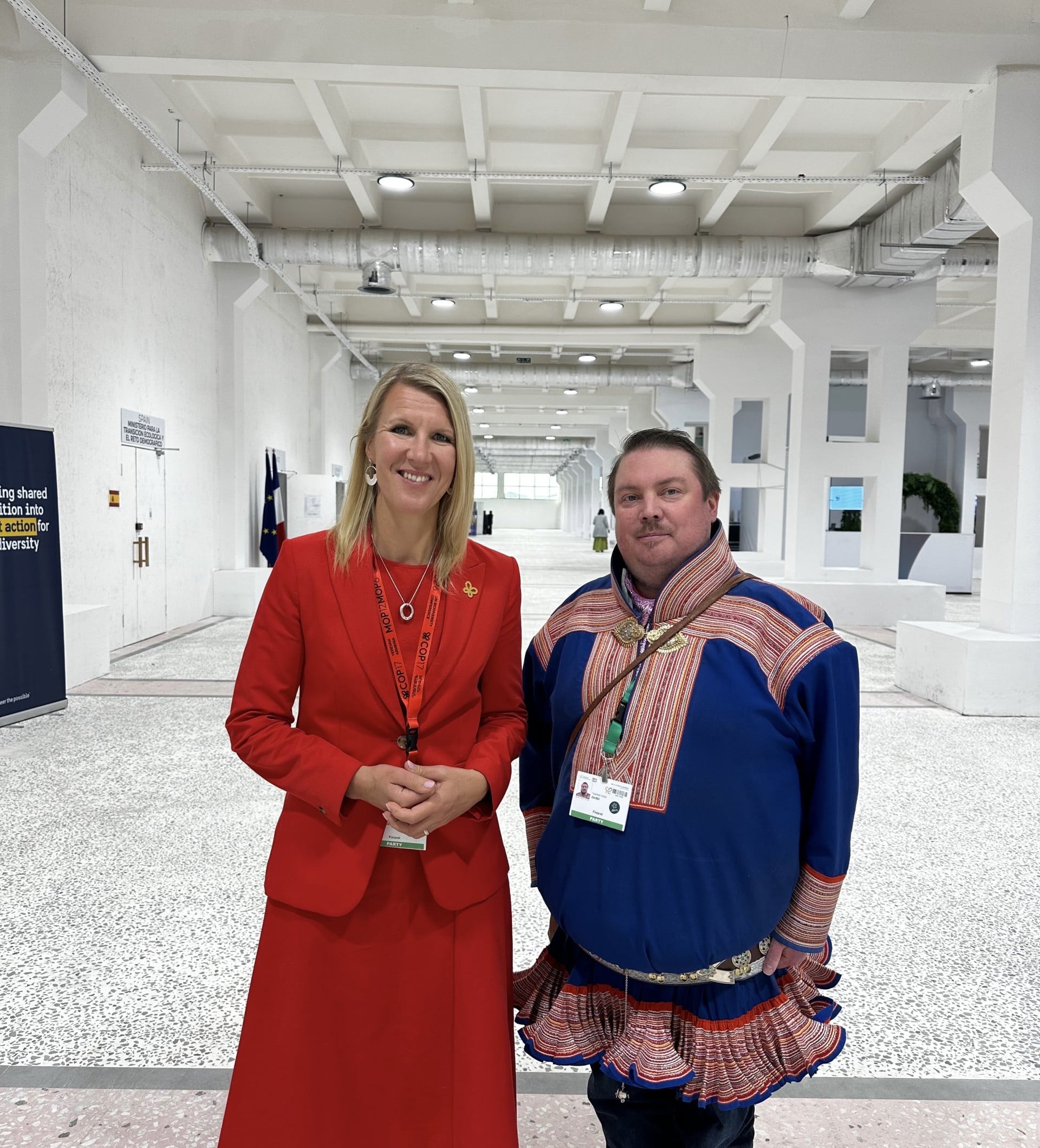
Second Vice-President of the Sámi Parliament Tuomas Aslak Juuso and Finland’s Minister of Climate and the Environment Sari Multala at COP17 in Yerevan.
“Finland’s support was extremely important to the Indigenous Peoples of the Arctic. I would like to thank Minister Multala, the experts at the Ministry of the Environment and the entire Finnish delegation for their efforts to defend our right to participate in the work of the Convention on Biological Diversity through our own structures,” Näkkäläjärvi says.
Sámi Parliament participated in COP17 as part of the Finnish delegation
The Sámi Parliament was represented at COP17 by Second Vice-President Tuomas Aslak Juuso and Specialist in International Affairs Inka Saara Arttijeff, who participated as part of the Finnish delegation.
“I would like to thank Tuomas Aslak Juuso and Inka Saara Arttijeff for their determined work in defending the rights of the Sámi and other Indigenous Peoples during difficult negotiations,” Näkkäläjärvi says.
The Sámi Parliament will continue its advocacy to ensure that the future modalities of the SB8J respect the rights of Indigenous Peoples, their right to self-determination, their own representative structures and traditional knowledge. Discussions on the modalities will continue in preparation for the next meeting of the Conference of the Parties to the Convention on Biological Diversity.
Background
The 17th meeting of the Conference of the Parties to the UN Convention on Biological Diversity (COP17) was held in Yerevan, Armenia, from 19 to 30 October 2026. The meeting included negotiations on the modalities of the permanent SB8J body dealing with the traditional knowledge of Indigenous Peoples, as well as on how Indigenous Peoples’ participation and own representation in the work of the body should be organised.
Article 8(j) of the Convention on Biological Diversity concerns the traditional knowledge of Indigenous Peoples and local communities and their participation in the conservation and sustainable use of biological diversity. For the Sámi Parliament, it is essential that the modalities of the SB8J safeguard the right of Indigenous Peoples to participate in its work through their own representatives and procedures.
Further information
Pirita Näkkäläjärvi
President
044 753 3766
pirita.nakkalajarvi@samediggi.fi
Tuomas Aslak Juuso
Second Vice-President
040 687 3394
tuomas.juuso@samediggi.fi
